Skip to Content

Christina Cantrill

TTT#345 Detroit Future Schools & Boston w/Ammerah Saidi, Danielle Filipiak, Christina Cantrill, Fred Haas, Chris Tsang 4.17.13


70:29 minutes (48.4 MB)

On this episode of TTT we learn more about connected learning, city as school, using media in justice-based education and more!

Educators from the Detroit Future Schools (DFS) program http://schools.detroitfuture.org share their experiences of attempting to re-invent the practice and purpose of education. They discuss the transformative processes that they use in classrooms along with student-generated media projects. Furthermore, theyshare how the DFS network is growing and refining its vision. 

Enjoy this conversation with +Ammerah Saidi and +ms filipiak from Detroit Future Schools and +Christina Cantrill From the National Writing Project (NWP) in Philadelphia and leave with replicable teaching practices, ideas for school-community interactions, and links to further resources, like this post by Danielle Filipiak on the NWP's Digital Is: "My Homeland:" A Connected Learning Media exchange project between South Korean and Detroit HS Students http://digitalis.nwp.org/resource/3842

In addition we connected with +Fred Haas and +Chris Tsang from the Boston Writing Project, just after the bombing at the Marathon. 

Paul Allison's profile photoammerah saidi's profile photoms filipiak's profile photoFred Haas's profile photoChristina Cantrill's profile photomonika hardy's profile photo

Here's more about Ammerah Saidi and Danielle Filipiak:

Ammerah Saidi graduated from the University of Michigan-Dearborn with a B.A. in English and Psychology certified as a secondary teacher. For four years, Ammerah taught in Detroit, Michigan and for one year in Al Hada, Saudi Arabia at an international school. She graduated from the Harvard Graduate School of Education with a Masters in School Leadership and is a coordinator for the Detroit Future Schools Program.

Danielle Filipiak is currently a doctoral student in English Education at Teachers College-Columbia University. She is interested in the multiple ways that students use literacy to navigate the hybrid and evolving contexts/landscapes around them. She has a decade of teaching experience and have also served in roles such as: teacher organizer, consultant, NWP Urban Sites leadership team member, school board member, co-founder of the Detroit Educator Network, and member of the Detroit Future Media program, a digital justice initiative in Detroit looking to reinvent the practice and purpose of educaiton.

Here are some of the resources Danielle describes on this episode of TTT: 


Click Read more to see the chat that was happening during this live webcast.


TTT#335 Play Youth Voices "It's not a game" Anthony Flores, Christina Cantrill, Emily Goligoski, Karen Fasimpaur, Paul Oh 2/6/13


61:28 minutes (42.2 MB)

On this episode of TTT, we finish Digital Learning Day http://www.digitallearningday.org/ with a conversation about open badges.

Paul Allison takes some time to reflect on a the use of badges in his high school English class, and look who joins him:

Paul Allison's profile photoPaul Oh's profile photoChristina Cantrill's profile photoKaren Fasimpaur's profile photoEmily Goligoski's profile photoAnthony Flores's profile photomonika hardy's profile photo

+Anthony Flores http://youthvoices.net/users/anthonyf- One of the first students to earn 15 badges and earn a credit in English: http://youthvoices.net/play

+Emily Goligoski, Open Badges Design & Community Lead at the Mozilla foundation who can help us think about Mozilla's Open Badge Infrastructure and Badge Backpacks. http://openbadges.org/en-US/

+Paul Oh, Senior Program Associate at National Writing Project, involved in many technology projects.

+Christina Cantrill who works with the National Writing Project and directs the Digital Is project http://digitalis.nwp.org

+Karen Fasimpaur who currently runs a small educational technology company that works with mobile technology integration in schools.http://www.k12handhelds.com/ She also runs the K12 Open Ed web sitehttp://www.k12opened.com/blog/and more!

+monika hardy, and +Paul Allison are on this episode as hosts, although Paul asked Karen if she would facilitate this episode of TTT because he wanted to talk about his experiments with badges, using P2PU, Open Badge Backpacks, and Youth Voices.

Enjoy listening to us trying figure out what we've been up to!


Click Read more to see the chat that was happening during this live webcast.


TTT#324 Session at NCTE - Open Learning: Empowering Teachers Through Professional Development - Chair, Karen Fasimpaur 11.17.12


74:34 minutes (51.2 MB)

Enjoy this special episode of TTT, recorded in Las Vagas. We live-streamed our session and this is a recording of that event. Here's the program description:

This panel will discuss innovative models of professional development that include peer collaboration, self-directed learning, active involvement, and learning communities. We will give models for using social media for professional activities and we'll share a wide variety of resources and brainstorm how to involve teachers in driving their own personal learning to improve student learning and the profession as a whole.

  • Chair: Karen Fasimpaur K12 Open Ed, Portal, Arizona -
  • Speaker: Paul Allison The Bronx Academy Senior High School, New York -
  • Speaker: Harry Brake American School Foundation Librarian, Mexico City, Mexico -
  • Speaker: Christina Cantrill National Writing Project, Berkeley, California -
  • Speaker: Paul Oh National Writing Project, Berkeley, California -

Karen's reflections and notes, posted on her blog K12 Open Ed on November 26, 2012:

Last week, I had the privilege of facilitating a panel at NCTE called “Open Learning: Empowering Teachers Through Professional Development.”

Anyone who knows me knows that I have become a big believer in open models of professional learning through spaces like Twitter, P2PU, TTT, Digital Is, and others. This session was all about that. (Slides below. Also, we live streamed the session, thanks to Paul Allison, and the video is here.)

To me, these new models of professional learning are all about value, openness, self-direction, agency, and authenticity. It’s time to reject PD that doesn’t achieve these goals.

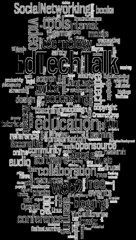
At the end of the session, we asked everyone to choose a few words that summarized what they thought the future of professional learning should be. Here they are.


Please add a comment with your own thoughts on this and join us in one of the many online spaces to explore this further.


TTT#320 Visioning New Curriculum K12OnlineConf. w/ Karen Fasimpaur, Paul Oh, Christina Cantrill, Sue King Bonita Deamicis 10.24


62:27 minutes (42.88 MB)

On this episode of TTT, we re-mix Karen Fasimpaur's Keynote for the K12 Online Conference strand: Visioning New Curriculum.

Paul Allison's profile photoSue King's profile photoPaul Oh's profile photoKaren Fasimpaur's profile photoChris Sloan's profile photoChristina Cantrill's profile photomonika hardy's profile photoBonita Deamicis's profile photo

Welcome to day one of the 2012 K-12 Online Conference! All presentations are listed and linked on our main conference schedule.

Presentation Title: Visioning New Curriculum

Presentation Description: This keynote session by Karen Fasimpaur for the “Visioning New Curriculum” strand talks about the unique opportunities presented by Common Core, digital tools, openness, and innovation. The time for one-size-fits-all, top-down curriculum is over. This session gives examples of curriculum that is personalized, real world, iterative, and collaborative. It is time for a new era in curriculum — one that is digital, open, innovative, and built by and for our community. This video includes reflection questions which can be explored collaboratively athttps://p2pu.org/en/groups/k12-online-2012/ The ideas in this video were developed collaboratively with a group of many people much smarter than me. Thanks to everyone who played along. This process was a testament to the power of collaboration and of creation as way to reflect and learn.

iPod video http://blip.tv/file/get/K12online-VisioningNewCurriculum681.m4v

mp3 audio http://blip.tv/file/get/K12online-VisioningNewCurriculum464.mp3


-----------------------------------------------------------------------

Link to presentation’s supporting documents

https://p2pu.org/en/groups/k12-online-2012/content/visioning-new-curriculum-strand/

Additional InformationP2PU K12 Online group – https://p2pu.org/en/groups/k12-online-2012/

Maker Faire – http://makerfaire.com

Junior FIRST LEGO League –http://www.juniorfirstlegoleague.org

Supercomputing Challenge – http://www.challenge.nm.org

National Writing Project – http://www.nwp.org

Youth Voices – http://youthvoices.net

NanoWrimo – http://www.nanowrimo.org

P2PU – http://www.p2pu.org

Common Core State Standards – http://www.corestandards.org

SETDA “Out of Print: Reimagining the K-12 Textbook in a Digital Age” – http://setda.org/web/guest/outofprint

OER for K-12 – http://content.k12opened.com

PhET Simulations – http://phet.colorado.edu

YouthVoices curriculum challenges and grid – http://youthvoices.net/play


Click Read more to see the chat that was happening during this live webcast.


TTT#311-3rd Space w/ Mike Murawski, Christina Cantrill, Ralph Cordova, Nina Simon, Bowen Lee, Fred Mindlin, Patricia Swank 8.22


61:54 minutes (42.51 MB)

On this episode we are joined by some of the participants from a "3rd Space Conference" in July and others interested in community collaborations. They discuss their learning together in St. Louis last month, and also talk about and how we can bring this work into our local communities in the future, wherever we are.

The 3rd Space Conference, held July 9-13, 2012, in St. Louis,
ourcolab.org/the-invitational-summer-institutes-teachers-teaching-teachers/ brought together teams from local sites of the National Writing Project nwp.org and museums around the US to explore creating projects and curriculum that take advantage of collaborations among students, teachers, and local communities.

Learn more about combining the insights and work of artists and museum professionals with hands-on art making and collaborative curriculum design.

Patricia Swank sent us this video "of my students engaging with a piece of art at the St. Louis Art Museum along with some of their theorizing as to how it impacted them."

Third space? Third place? There's a useful summary of some of these concepts on Wikipedia, and it starts like this:

The third place (also known as Third Space) is a term used in the concept of community building to refer to social surroundings separate from the two usual social environments of home and the workplace. In his influential book The Great Good Place, Ray Oldenburg (1989, 1991) argues that third places are important for civil society, democracy, civic engagement, and establishing feelings of a sense of place. --Wikipedia (accessed 8.21.12)en.wikipedia.org/w/index.php?title=Third_place&oldid=500220817

Ralph Cordova's descriptions of the 3rd space work: "The language of envisioning and possibilities signal to us all that what we're about to experience, although principled and theoretically grounded, is completely yet-to-be-invented."

Jump into this conversation with the fascinating educators, artists, museum directors... 3rd Spacers!... and let's see where it takes us!

Click Read more to see a copy of the chat that was happening during the webcast.

Syndicate content