We rushed to get this up right away, because we'd love to invite you to "Help Document the World's Story" on Friday, 11.11.11. Video, photography, multimedia projects need to be created on this Friday, then uploaded to the One Day on Earth site as soon as possible. On this episode of Teachers Teaching Teachers we are joined by Cari Ann Shim Sham, who ends this webcast by reminding us that participation in this project is "Easy! Just tell your students about the Web site."
Check out the Education Toolkits
that Cari Ann and her colleagues created.
Here's how they describe their project at onedayonearth.org:
On November 11th, 11.11.11, across the planet, documentary filmmakers, students, and other inspired citizens will record the human experience over a 24-hour period and contribute their voice to the second annual global day of media creation called One Day on Earth. Together, we will create a shared archive and a film.
Founded in 2008, One Day on Earth's first mediacreation event occurred on 10.10.10. The collaboration was the first ever simultaneous filming event occuring in every country of the world. It created a unique geo-tagged video archive as well as an upcoming feature film.
Together, we are showcasing the amazing diversity, conflict, tragedy, and triumph that occurs in one day. We invite you to join our international community of thousands of filmmakers, hundreds of schools, and dozens of non-profits, and contribute to this unique global mosaic. One Day on Earth is a community that not only watches, but participates.
On this episode of Teachers Teaching Teachers, we get together and talk about Youth Voices with Alice Barr, Matt Montagne, Sandy Scragg, Sheri Edwards, Shantanu Saha, Valerie Burton, Chris Sloan, and Paul Allison.
Click Read more to see a copy of the chat that was happening during the webcast.
On this episode of Teachers Teaching Teachers, we learned more about playing, modifying, and designing games.
One of our guests was Scott Price, a game developer or producer at Gamestar Mechanic. A few of us in the New York City Writing Project, especially Susan Ettenheim and Shantanu Saha — both of whom are on this podcast — have been using a beta version of Gamestar Mechanic this spring with their students.
Students or as they are know inside of this game, “Mechanics" can do a bunch of fun and interesting things with Gamestar Mechanic, and most of them fall into three categories:
Quest
You’ll start the game playing the Gamestar Mechanic Quest. You’ll start out as a new arrival in Factory 7. Along the way, you will play games, fix broken games and even design games of your own. As you complete challenges, you’ll collect “sprites”: avatars, enemies, blocks and other tools that serve as the building blocks for making games. Workshop
In the workshop, you can use the sprites you’ve earned to build your own games. You can edit and change games you have created, add content that tells the “story” behind your game and, of course, play the games you’ve made. Game Alley
If you’ve created an awesome game, you can publish it to Game Alley. In Game Alley, mechanics can play games created by other users and share the games they have created. You can review and comment on other mechanics’ games to let them know how much their games rock or what they can do to make them better.
On this episode of TTT, we were also priviledged to have a 6 grade teacher who has been using Gamestar Mechanic as well as other gaming platforms extensively with his students, Al Doyle.
Al is the “Sports for the Mind” domain teacher at Quest 2 Learn, a new public school in New York City “where students learn to see the world as composed of many different kinds of systems. It is a place to play, invent, grow, and explore.”
Al Doyle, a native of Brooklyn, has interests ranging from art and animation to set design, digital imaging and most recently, game design. He was the producer and lead animator for the Salvadori Foundation’s Art of Construction, a web site designed to teach basic architecture and engineering to middle school students. For more than twenty years, he has taught computer graphics and multimedia at leading independent New York City K-12 schools. Al developed a popular course for adults, Learning Photoshop Through Art, at the Guggenheim Museum. Al received a Jerome Foundation Fellowship to create a portfolio of prints at Bob Blackburn’s Printmaking Workshop which is now in the Library of Congress collection. Al studied stage design at the Polakov Studio in the West Village and was resident designer at HB Studio for several years. In addition, he designed over 100 educational theater productions and over 25 professional designs for ballet, dance, drama, musical theater and opera in off-Broadway and regional theater. As Director of Internet Training at the National Teacher Training Institute for New York’s Channel Thirteen / WNET, Al traveled extensively in a “train-the-trainers” model of technology integration for K-12 teachers. Currently, in addition to his role at Quest, Al teaches for the graduate division of Touro College’s Masters Degree Program in Instructional Technology.
We hope you enjoy this episode, and we invite you to join us in our quest learn more about how to understand “game mechanics.” We want to imagine the different possibilities that Gamestar Mechanic and other sites like this provide to our students as we make room for these new literacies of game play, game modding, and game design!
Click Read more to see a copy of the chat that was happening during the webcast.
Because of a rare snow day in New York City, four NYC Writing Project teachers used some of our "found time" to do some impromptu thinking together. Our students are using Youth Voices, and recently we agreed to build a new curriculum this Spring. We got together on Skype today to discuss our budding plans for teaching "I-Search, Diigo, and Gaming."
What you will hear us discussing on this podcast is the beginning of a plan for a research and gaming curriculum and a proposal for a series of three or four professional development sessions this Spring that are focused on some portion of the game-playing and game-building curriculum that Global Kids has developed. We also have a plan for inviting other interested New York City Writing Project teachers to join us by experimenting with gaming themselves and by developing this curriculum with us.
What our small study group, the New York City Writing Project's "Tech Thursdays" group wants to do is to create a curriculum that has modules that can fit into different types of for classes, especially core subject areas. For now we are doing this work in the following content areas:
Computer Arts (Susan Ettenheim)
English (Paul Allison and Chris Sloan)
Technology (Shantanu Saha and Madeline Brownstone)
Art (Renee Dryg and David Marini)
We are creating a curriculum that assumes that teachers will be able to commit to doing it two times a week for at least 10 weeks (or similar parameters).
Those of us working on this curriculum this Spring will build successful collaborative game-based learning experiences for our students and we will learn from our failures. At the same time, we will be constantly building the rationales and the theoretical framework for including a curriculum like this into core classes in grades 6 -12. We are thinking about how we might involve other New York City Writing Project teachers in this work, perhaps in summer institue that integrates gaming into our current Advanced Summer Institute model. We are also planning for day-long workshops and regular study groups like our Tech Thursday groups in the Fall 2010 and Spring 2011.
We would also welcome your participation! As we say in this podcast, we will be using the What's Up? section of Youth Voices to have our student-gamers become more reflective about gaming, and we'll ask the students to contribute to the knowledge based of serious gaming by developing analyses by adding Discussions to Youth Voices, for example here are Comparative Essays from the first week of our new curriculum. If you have been looking for a way for your students to join Youth Voices, perhaps you could adapt, adopt, and contribut to this curriculum as well. Please join Youth Voices, and let us know!
In the meantime, we welcome you to eavesdrop on this impromptu planning session shared by four New York City public school teachers enjoying a rare snow day in New York City: Paul Allison, Susan Ettenheim, Madeline Brownstone, and Shantanu Saha.
Click Read more to see a copy of the chat that was happening during the webcast.
If you were itching to include gaming in your curriculum, what would you do? Susan and I, and others in the New York City Writing Project started by having a conversation with some pretty smart people earlier this month on Teachers Teaching Teachers. We met most of these educators in November 2009 at the National Writing Project's "Digital Is..." Conference, which was an invitational one-day conference supported by the John D. and Catherine T. MacArthur Foundation's Digital Media and Learning Initiative.
On this podcast we are joined by these amazing folks:
Barry Joseph and Rafi Santo from Global Kids.
Jonathan Richter and Peggy Marconi who are working together at the Oregon Writing Project at the University of Oregon.
New York City Public School teachers, Al Doyle, David Marini, and Shantanu Saha
Let's start by quoting Global Kids on Games-based Learning|:
Since 2002, Global Kids has been a leader in the use of online games to promote global awareness, engaged citizenship, and 21st Century Learning Skills. Through Playing 4 Keeps, Global Kids trains urban youth to think critically about digital games and design games about important social issues. Here is an article that just came out about their most recent program for individual educators: American Library Association on Global Kid’s games-based trainings.
Here's more about Barry Joseph and Rafi Santo:
Barry Joseph, Global Kids, Inc., Director of the Online Leadership Program, holds a BA from Northwestern University and an MA in American Studies from New York University. Barry came to Global Kids in 2000 through the New Voices Fellowship of the Academy for Educational Development, funded by the Ford Foundation. He has developed innovative programs in the areas of youth-led online dialogues, video games as a form of youth media, the application of social networks for social good and the educational potential of virtual worlds, combining youth development practices with the development of high profile digital media projects that develop 21st Century Skills. He has also worked with GK’s development program to secure funding from a number of foundation’s and corporations. Barry served on the steering committee of the MacArthur Foundation’s Digital Media and Learning initiative and his writing appeared in the Foundation’s Ecology of Games volume in 2007. He has spoken at numerous conferences and published articles in a wide variety of publications.
Since joining Global Kids, Rafi Santo has been developing and implementing educational technology projects as varied as youth advisories on digital media, online youth dialogues, social media civic engagement programs and youth leadership development and peer education in virtual worlds. He has collaborated on projects with organizations including The Newshour with Jim Lehrer, UNICEF, the United States Holocaust Memorial Museum and the Massachusetts Institute of Technology and has worked with many of the MacArthur Foundation’s Digital Media and Learning grantees to strengthen their initiatives through youth voices and perspectives. He has ten years of experience in youth development and education. Prior to joining Global Kids, Rafi did field work in international development in India, helping to build bridges between Hindu and Muslim communities in conflict. He graduated with a BA in Integral Studies from New York University.
Next check out this is brief overview of a gaming project that Jonathan Richter and Peggy Marconi are working on:
The Simulations Gaming Development Initiative (SGDI) program at Lane Community College aims to integrate programming and gaming industry curricula into a distributed 3D virtual and web-enhanced platform in order to enhance access and innovation for people across the country. The project has been designed to start locally and scale up as the capacity for a geodistributed Community of Practice emerges to include distance students from participating high schools and community colleges. An introduction to Second Life course is being piloted Fall 2009, with concurrent design of a gaming and simulation programming course to be implemented Spring 2010. The SGDI project features a focus on building capacity to attract non-typical students into the computer sciences - particularly females - by developing support structures for learning such content in accessible and collaborative ways.Center for Advanced Technology in Education.
Here's more about Jonathon Richter and Peggy Marconi:
Jonathon Richter, Ed.D is Director of The Center for Learning in Virtual Environments at The University of Oregon where he currently is co-Principal Investigator on two National Science Foundation grants – one to integrate computer science and game development into virtual environments at Lane Community College in Oregon and the other investigating the way globally distributed teams use virtual worlds to collaborate and innovate. He is the co-founder and current chair of the American Educational Research Association’s special interest group on virtual worlds named the Applied Research in Virtual Environments for Learning (ARVEL) and is leading the MERLOT Taskforce on Virtual Worlds.
Peggy Marconi is the Associate Director Oregon Writing Project at the University of Oregon, Center for Advanced Technology in Education . Peggy is good at making curriculum connections for classroom application for gamimg. And she iscurrently working with colleagues to develop Oregon Writing Project Institutes in Second Life.
Finally, allow us to introduce you to two New York City Public School teachers, Al Doyle and Shantanu Saha:
Al Doyle | Sports for the Mind domain teacher Al Doyle, a native of Brooklyn, has interests ranging from art and animation to set design, digital imaging and most recently, game design. He was the producer and lead animator for the Salvadori Foundation’s Art of Construction, a web site designed to teach basic architecture and engineering to middle school students. For more than twenty years, he has taught computer graphics and multimedia at leading independent New York City K-12 schools. Al developed a popular course for adults, Learning Photoshop Through Art, at the Guggenheim Museum. Al received a Jerome Foundation Fellowship to create a portfolio of prints at Bob Blackburn’s Printmaking Workshop which is now in the Library of Congress collection. Al studied stage design at the Polakov Studio in the West Village and was resident designer at HB Studio for several years. In addition, he designed over 100 educational theater productions and over 25 professional designs for ballet, dance, drama, musical theater and opera in off-Broadway and regional theater. As Director of Internet Training at the National Teacher Training Institute for New York’s Channel Thirteen / WNET, Al traveled extensively in a “train-the-trainers” model of technology integration for K-12 teachers. Currently, in addition to his role at Quest, Al teaches for the graduate division of Touro College’s Masters Degree Program in Instructional Technology
Shantanu Saha is a technology teacher at Baccalaureate School for Global Education. On his Google profile, Shantanu lists his Superpower as: “I can heal electronics by touch.” His Interests are “games, games, and more games.”
David Marini and Paul Allison are colleagues at the East-West School of International Studies in Flushing, Queens. David mainly teaches Art, and he is a big gamer.
Gamer or not, you'll be inspired by this episode of Teachers Teaching Teachers. Let us know how you are using games in your classroom!
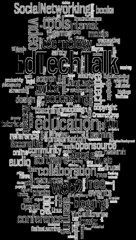
Do you have your EdTechTalk stuff yet? Did you know there are T-shirts, hats, coffee mugs, buttons, magnets, and tote bags available? They're all based on Wordle interpretations of the EdTechTalk Delicious tags.
What are you waiting for? These are limited edition items. Shop now and avoid the rush!
Recent comments
6 weeks 6 days ago
7 weeks 5 days ago
7 weeks 5 days ago
9 weeks 21 hours ago
19 weeks 1 day ago
26 weeks 6 days ago
29 weeks 5 days ago
35 weeks 2 days ago
38 weeks 4 days ago
41 weeks 4 days ago