It’s Spring in the northern hemisphere. Some of us have five or six, others nine weeks left in the academic year. It’s a great time to try out something new or to reflect on what we tried this year. What are you doing this academic season? Listen to this episode of Teachers Teaching Teachers, then let us know what you are doing this spring.
You will <fill in the blank>
Paul Allison and Rachel Smith report on how Evoke is going, perhaps with a student or two.
Susan Ettenheim and Chris Sloan talk about how their collaborations in digital photography classes are going.
Matt Montagne and a student discuss Goggle Apps and the plans, at the time, for Earth Day, which was a success again this year.
This episode of Teachers Teaching Teachers, was recorded during a live webcast back in the middle of February. We think you will enjoy this conversation with William Kist and Mike Slowlinski, one of the teachers who is featured in William Kist's new book, The Socially Networked Classroom: Teaching in the New Media Age. Troy Hicks has a thought-provoking question to ask toward the end of this podcast as well. Get the book, and learn along with all of us.
William Kist is an associate professor at Kent State University, where he teaches undergraduate and graduate courses focused on adolescent literacy. He has been a middle school and high school English teacher; a Language Arts and Social Studies curriculum coordinator; and a consultant and trainer for school districts across the United States. Kist has over 30 national and international conference presentations and 10 published articles to his credit, including his book The Socially Networked Classroom: Teaching in the New Media Age (2010, Corwin Press.). In addition to his work in education, Kist has worked as a video/film producer and musician. Kist is editing one independent feature film, Summer’s Journey, and is developing his original screenplay, Field Trip, to be filmed as an independent feature in 2008.
This podcast is another in a series of Teachers Teaching Teachers shows to feature the authors of a recent outcrop of books on new media and literacy (Using Technology to Improve Adolescent Writing: 186. Copyright Clarity: 184, 135, The Digital Writing Workshop: 172, 171, 170, Teaching the New Writing: 157, 156, 155, Teaching Writing Using Blogs, Wikis, and other Digital Tools: 138) Perhaps we have the makings of a new discipline here, or at least a budding new branch on the tree of academic inquiry. See the National Writing Project's list at Teaching Now: Digital Writing Books. What would you add to this list? Let us know by adding a comment below.
Click Read more to see a copy of the chat that was happening during the webcast.
Glen Bledsoe, Jeff Schwartz, and Paul Allison are interviewed by Kevin Hodgson on this podcast. We talked about collaboration and the tools we use to collaborate in the classroom.
As educators move forward into the terrain of digital literacy and learning with their students, part of the challenge is balancing the innovation of new technology with the accountability of assessment.
Chapter authors Paul Allison, a high school teacher, technology liaison at the New York City Writing Project, and facilitator of TTT; Glen Bledsoe, an elementary teacher and teacher consultant at the Oregon Writing Project at the University of Oregon; and Jeff Schwartz, high school teacher and member of the Bread Loaf Teachers Network, will share examples of their classroom practices to prompt a discussion about the collaborative nature of writing when using technology in the classroom.
Please enjoy the podcast, and add a comment with your story about how writing is changing in your classroom.
This podcast is the second of three Teachers Teaching Teachers shows this month that focused on this book. On TTT#155 (June 10) we interviewed the editors of this book. On TTT#157 (June 24), we had various authors from the different chapters of Teaching the New Writing on the show.
Click Read more to see a transcript of a chat that was happening during the webcast.
Susan Ettenheim and Paul Allison welcome colleagues Ron Link (NYC Writing Project), Gail Desler (Area 3 Writing Project in California), and Fred Hass (Boston Writing Project) for a conversation about collaboration, publishing, and building a responsive community of students, mainly within our work together on Youth Voices.
Please listen to how we talk to each other, then plan to join us in the future.
Click Read more to see a transcript of a chat that was happening during the webcast.
This is a gathering of ICT Integrators from the greater Sydney metropolitan area. This group meets in a different school each time, three or four times each year. The idea is to get a close look at the way each different school approaches the challenge of integrating technology into teaching and learning.
Teachers will hear about what happens in the host school from real teachers in real classrooms.
I suspect many of you are familiar with Curriki--an online education community of teachers, students and other education stakeholders committed to using and sharing free, open-source K-12 instructional materials with others around the globe.
This summer, Curriki is sponsoring its annual "Summer of Content" initiative. This is an opportunity for teachers to share their own curricula units online with a Curriki audience of several hundred thousand educators.
In this international edition of It’s Elementary we are joined by Dennis Newson and Nick Noakes session facilitators for EVOVWLL 2009 and Vance Stevens the original webhead. We attempted to define what self directed learning is and how it has changed over time. We talked about the importance of learning in a network and building our own Personal Learning Environment (PLE or PLN). We talked about the structure of the EVO sessions and the role of the facilitators. We evaluated the different tools used in the course such as the wikis, nings and the like. We concluded that it really IS about the people and how we connect in these online spaces. Check out all the great links in the text chat
Ed21, a conference for educators - and all learners, is happening this Saturday, February 21st from 8:00 a.m. to 11:00 a.m PST (global time). The conference is a mix of four Ted-like 14 minute presentations with time for conversation in between and after the presentations.
The website answers the question, “What is Ed21?”, with this:
We are interested in discussing how we can reinvent the educational system so students can be:
• independent processors of information
• solvers of real life problems
• curious and passionate about their interests
• effective oral and written communicators
• collaborators who make an impact on their community, one another, and the world
To this end we are committed to challenging the status quo, connecting people with networks, and sharing ideas worth spreading.
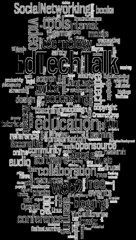
Do you have your EdTechTalk stuff yet? Did you know there are T-shirts, hats, coffee mugs, buttons, magnets, and tote bags available? They're all based on Wordle interpretations of the EdTechTalk Delicious tags.
What are you waiting for? These are limited edition items. Shop now and avoid the rush!
Recent comments
6 weeks 6 days ago
7 weeks 4 days ago
7 weeks 4 days ago
9 weeks 7 hours ago
19 weeks 21 hours ago
26 weeks 6 days ago
29 weeks 5 days ago
35 weeks 2 days ago
38 weeks 4 days ago
41 weeks 3 days ago