There were many wonderful moments at ISTE this year! One of them was the closing keynote by Chris Lehmann, principal of the Science Leadership Academy (SLA) in Philadelphia. That evening we invited Chris, Bud Hunt, and four teachers from SLA -- Diana Laufenberg, Zac Chase, Matt VanKouwenberg, and Larissa Pahomov -- to join us at Rembrandt's Restaurant (aka SLA North) to reflect on ISTE and whatever else they wanted to talk about.
Enjoy the SLA students and Chris Lehmann's speech in this video, check out his reflections, and listen to our conversation. Enjoy!
Chris Lehmann's ISTE Keynote - Process and Impressions: I gave the closing keynote at ISTE on Wednesday, and it was a really wonderful experience. It's an amazing thing to get up in front of 5,000 plus people and talk about what you deeply believe. It was particularly hard for two reasons - one, the ISTE community is as close to a "home-base" outside of SLA that I have in the world of education. There are so many people - too numerous to mention here - who have been friends, co-learners, mentors, sounding boards over the past six years that to speak in front of all of them in one place was both exhilarating and a little intimidating... and many of them had heard me speak at other events, so finding something new for that segment of the audience was a real challenge. But the real reason it was so hard to craft this speech was because I was preceded by my students. (Read the rest of this post on Practical Theory - A View from the Classroom.
Click Read more to see a copy of the chat that was happening during the webcast.
Talking about their own versions of place-based education, our guests on this episode of Teachers Teaching Teachers are:
Diana Laufenberg, Zac Chase, and a student, Luna from the Science Leadership Academy in Philadelphia
Woody Woodgate from Alaska
David Pulling from Louisiana State University at Eunice
We asked Diana and Zac to come talk about an interdisciplinary project they did/are doing with juniors. Each student was invited to find a building in his/her neighborhood with a name on it, then to learn the history of that person and the building. From there, students created multimedia presentations. Diana and Zac brought this example to their conversation at last month’s Educon 2.3, and we wanted to learn more! Wait until you see this work!
David writes:
Many in my semester’s class have joined Voices on the Gulf since a couple of weeks ago, and Wednesday I’m going to give them a prompt for their first post. I’m going to start them off the same way I did the class last fall, asking them to study their back yards or neighborhoods or pastures or homes to identify some place or thing that they may take for granted and to consider the cost of losing it, etc. etc. etc. I’ll encourage them to post pix or videos as well. I’ll guide them into inquiry from there. I hope you’ll hear from some neat students and read some neat stuff. I’ve got an eager and industrious bunch this semester.
If that’s not enough, our old friend from Alaska, Woody will be joining us as well. Woody has focused a lot of his scholarship and pedagogy around place-based education in rural Alaska. We have already learned a lot from him, and we look forward to re-connecting with him on Wednesday. Woody writes:
I am negotiating to go back out to rural Alaska to teach at a site that is heavily focused on what they call “relevant education” and what we have been calling place-based education. I will be focusing on how to incorporate standards into the already established outdoor program. Therefore, I gladly accept your invitation in hopes that I can get back up to speed with what others
have been doing in this area in the last 3 years since I have been out of the classroom trenches.
Pretty exciting stuff! We hope you enjoy learning with us.
Guest Host: Diana Laufenberg, Science Leadership Academy
Dave, John, and Jen welcome guest host Diana Laufenberg to continue the new format for EdTechWeekly that offers a deeper look into a smaller number of topics each week. This week, the discussion focuses on the following topics:
Jen's Link: Jen is going to take the opportunity to get our guest host's perspective on involving students in an externally supported science design challenge, such as http://www.nasarealworldinworld.org/Home.aspx. Some questions to consider are: How can teacher's work this into their semester / school day planning? What is the motivation for a teacher / students / professional mentor to participate?
We are putting together a team to help us to develop this site — and fast. We've set up the following Community Managers:
David Pulling (Louisiana) - Site Manager
Paul Allison (New York) - Site Manager
Catherine Tibbs (Mississippi) - Art and Humanities
Ellen Steigman (Louisiana) - Art and Humanities
Susan Ettenheim (New York) - Art and Humanities
Paige Baggett (Alabama) - Community and Culture
Suzie Boss (Oregon) - Community and Culture
Jeff Mason (Florida) - Health and Wellness
Andrea Zellner (Michigan) - Health and Wellness
Natasha Whitton (Louisiana) - Money and Careers
Chris Sloan (Utah) - Money and Careers
Alicia Blair (Mississippi) - Nature and the Environment
Matt Montagne (California) - Nature and the Environment
Kyle Meador (Louisiana) - Social Issues and Human Rights
Diana Laufenberg (Pennsylvania) - Social Issues and Human Rights
Stacey Ferguson (Mississippi) - Our Space (K-6)
Margaret Simon (Louisiana) - Our Space (K-6)
Gail Desler (California) - Our Space (K-6)
Kevin Hodgson (Massachusetts) - Our Space (K-6)
Along with this growing group of National Writing Project teachers, teachers from along the Gulf Coast, teachers in Edutopia’s pblcmp, AND/OR teachers involved with the EdTechTalk/WorldBridges community, we have been organizing (and working with Bill Fitzgerald at FunnyMonkey) to build this site that will do the following:
Provide a place where we can collect, amplify, and engage the poems, stories, and essays that students along the Gulf Coast bring to their teachers this month, as schools open.
Layer these stories, poems, and essays with online sources, including news releases and poetry (such as the poems on Poets for Living Waters).
We don’t know yet! Many of us have been working for some time on building a site like Voices on the Gulf, and we have some idea what directions this will take, AND we want to allow the discussions on the site to help us know how to develop.
The most important item, above is #1 - we are working as fast and hard as possible to get the site out to teachers, and for it to be easy to use. If you would like to add a poem, thought, or anything, please sign up, then once you’ve been made into a member, you’ll see the Add Discussion button. Please go in and write a brief reflection, add photo, a video, or almost anything — just to see how easy it is to do. AGAIN, THANKS!
Students have been coming back the past couple of weeks in many Gulf Coast schools. A lot of our connections with teachers on the Gulf have happened this summer on a live webcast that we do every Wednesday evening. You may have already been on the show. We would love it if you would come back. We’ve been able to make a lot of invaluable connections. You can see what we mean here: http://edtechtalk.com/teachersteachingteachers
We would love to invite you to join us on Teachers Teaching Teachers every Wednesday at 6:00 p.m. Pacific / 8:00 p.m. Central / 9:00 p.m. Eastern. If you use Skype, please email Paul Allison or Susan Ettenheim and let us know your Skype name (again)— just helps us to know who to look for! We hope that you will be able to join us soon on a Wednesday evening.
Click Read more to see a copy of the chat that was happening during the webcast.
This the fourth week of a summer series in which we have focused Teachers Teaching Teachers on the BP Gulf Oil Spill. Our guests included:
Matt Montagne, who has been collecting materials, such as: October 28th, 2010 TEDxOILSPILL Talks. The Google Doc that Matt can be found at http://tinyurl.com/voicesonthegulf - And stay tuned! There much more to come under the domain: "VoicesOnTheGulf." (We also eventually agreed on the common tags: "voicesonthegulf" and "edoilspill"
Diana Laufenberg, a history teacher from Science Leadership Academy who joined us on this topic 3 weeks ago will try (from her family’s farm) to join us again.
Natasha Whitton, one of the three teachers from the Southeastern Louisiana Writing Project two weeks ago, hopes to join us again
Andrea Zellner, a biology and English teachers from the Red Cedar Writing Project in Michigan will be with us again!
AND NEW to our webcast: Catherine Tibbs, a former high school English teacher who works for the Live Oak Writing Project in Mississippi joined us. (She is also invited colleagues who will be heard on future podcasts. Catherine wrote this on a Monday late in June :
I don’t know if you know this or not, but oil reached the MS beaches this weekend. We had been fortunate so far to avoid this mess. From what I understand from the media, the manpower was not coordinated in the Gulf to skim the oil that is now reaching us. Isn’t that always the case?
Also new to the podcast is Jeff Mason from Penscola, Florida, a biology and technology teacher. We met a Twitter, and we look forward to a continuing connection. (Jeff came on the webcast last week as well, so look for more from him on future podcasts.)
We hope you will be able to join us in this ongoing project. Help us know how to respond as teachers—and with our students—to this monster that will continue to reek havoc for weeks? months? to come!
Join us to talk about what's happening in the gulf every Wednesday at http://EdTechTalk.com/live at 9:00pm Eastern / 6:00pm Pacific USA (World Times).
Click Read more to see a copy of the chat that was happening during the webcast.
This is the first in a series of TTT webcasts that we are doing this summer in response to BP's gushing oil leak in the Gulf of Mexico. We are asking teachers from all over to join us each Wednesday evening this summer to put together a curriculum that will help our students build their own responses to the human, animal, and ecological devestation that has been happening every day since April. Incredibly, this "spill" promises to continue wrecking damage into the fall and winter.
Diana Laufenberg, a teacher at the Science Leadership Academy in Philadelphia, started us in this series of shows with a the powerful, clear-eyed stance of a history teacher commited to helping her students find their own answers to "How does this go on?" Diana's descriptions of a project in which her students made infographics this spring will inspire, and her ideas for connecting her students to students in the Gulf will make you want to join us in this endeavor. We also spoke to a math teacher, Matthew, from Pennsylvania.
Diana Laufenberg ( @dlaufenberg and Living the Dream ) is a history teacher at the Science Leadership Academy in Philadelphia. On the school’s website, she is described as “a nomad.”
Diana is a true life-long learner. She currently works with 11th grade students at SLA. Experiential education is an integral part of her educational pursuits taking students from the classroom to the real world and back again. Before finding her way to Philadelphia, she was an active member of the teaching community in Flagstaff, AZ where she was named Technology Teacher of the Year for Arizona and a member of the Governor’s Master Teacher Corps.
In the second and fourth webcasts in June, podcasts of which will be available later this week, we were privilidged to have teachers from the Gulf join us. We are working to find a place for all of us to contribute resources, connections, and ideas. On this webcast we talk about the possibility of connecting in some way through the Learning Network of the New York Times. (See "The Gulf Oil Spill in the Classroom.") Another possibility is for some of us to work with Suzie Boss and the teachers who have signed up for Edutopia's Project-Based Learning Camp, which will start in the middle of July (although it's now closed to new participants). Also Matt Montagne started this Google Doc to begin collecting our thoughts, resources and plans.
Please enjoy to this podcast. Diana gets us off to a great start on this journey! And please plan to join us this summer 9:00pm Eastern / 6:00pm Pacific USA Wednesdays / 01:00 UTC Thursdays World Times.
Click Read more to see a copy of the chat that was happening during the webcast.
On this podcast a few of us who attended Educon 2.2 reflect on our learning there. Appropriately enough, we were guided in this reflective conversation by:
Hannah, a student from The Science Leadership Academy in Philadelphia
On this podcast you'll hear what four teachers, three of us from different Writing Projects, had to say just a few days after ther conference. You'll hear from:
Joe Conroy, NWP at Rutgers University Writing Project (Don't miss Joe's video, below.)
Gail Desler, Area 3 Writing Project in Northern California
Dolores Gende, Academic Technology Coordinator and Physics teacher from Dallas, Texas
If you were at Educon, we hope you'll be able to compare notes with us. If you were not able to make it, perhaps this podcast can suggest why there's so much interest in Educon!
Here's how the organizers of EduCon 2.2 describe the conference:
What is Educon?
EduCon 2.2 is both a conversation and a conference.
And it is not a technology conference. It is an education conference. It is, hopefully, an innovation conference where we can come together, both in person and virtually, to discuss the future of schools. Every session will be an opportunity to discuss and debate ideas — from the very practical to the big dreams.
The Axioms
Guiding Principles of EduCon 2.2
Our schools must be inquiry-driven, thoughtful and empowering for all members
Our schools must be about co-creating — together with our students — the 21st Century Citizen
Technology must serve pedagogy, not the other way around
Technology must enable students to research, create, communicate and collaborate
What happens when a homegrown webcaster has too many things going on during the same time period? She thinks that she already posted a show but realizes (finally) that she didn't. So here it is, the November 22, 2009 show. Sorry folks.
Lisa, Maria and Sheila discussed the issue of dealing with a very "chatty" classroom, where the noise level is high but productivity is good. Later in the show, Diana Laufenberg, from the Science Leadership Academy in Philadelphia joined the conversation and talked a bit about Educon2.2.
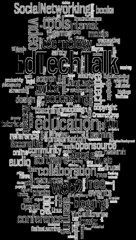
Do you have your EdTechTalk stuff yet? Did you know there are T-shirts, hats, coffee mugs, buttons, magnets, and tote bags available? They're all based on Wordle interpretations of the EdTechTalk Delicious tags.
What are you waiting for? These are limited edition items. Shop now and avoid the rush!
Recent comments
6 weeks 6 days ago
7 weeks 5 days ago
7 weeks 5 days ago
9 weeks 17 hours ago
19 weeks 1 day ago
26 weeks 6 days ago
29 weeks 5 days ago
35 weeks 2 days ago
38 weeks 4 days ago
41 weeks 4 days ago